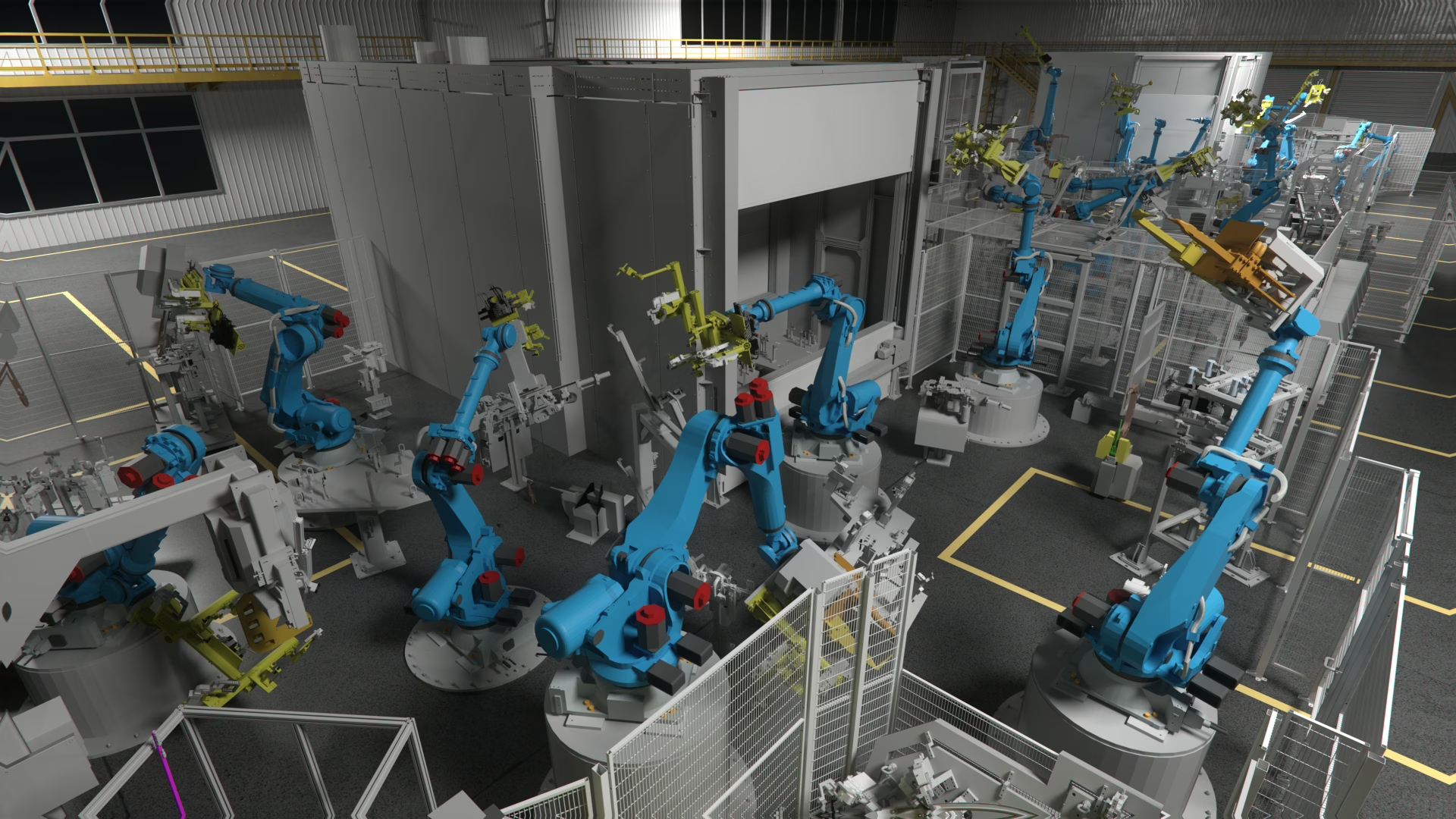

Virtual Peripheral Simulation
Simulate sensors, actuators and field devices in a virtual automation environment.

Move through every stage of automation with one connected approach.
Explore proven use cases for testing, validation and production optimization.
From initial planning to production-ready systems and automated engineering workflows.
Build reliable virtual commissioning workflows, industrial software and reusable expertise.
Tools for the Digital Factory
RF::SUITE
One connected platform for engineering, simulation, validation and production intelligence.
Explore RF::SUITE →
Choose the tools your workflow needs and connect them within one consistent engineering environment.
We combine simulation, virtual commissioning and industrial software expertise across demanding production environments.
From individual machines to complex production lines: we connect engineering, simulation and operation throughout the entire lifecycle.
Explore IndustriesWe participate in national and international research projects focused on digital engineering, automation, artificial intelligence and sustainable production systems.
Resilient, sustainable and adaptable industrial production systems.
→ 02 Research Project REDRIVESResilient drive technologies and robust industrial production processes.
→ 03 Research Project DIGIKLEBDigital methods for connected adhesive processes and quality assurance.
→ 04 Research Project GENIUSIntelligent engineering methods for data-driven manufacturing systems.
→Learn more about EKS InTec, our locations, career opportunities and how to get in touch with our team.
Virtual Periphery & PLC Simulation
RF::ViPer enables engineers to simulate virtual peripheral devices, fieldbus communication and automation behavior for virtual commissioning. PLC logic, sensor signals, actuator behavior and system interactions can be tested before real hardware is available.
RF::ViPer
RF::ViPer is the virtual peripheral simulation and virtual commissioning module within the RF::SUITE. It enables engineers to simulate sensors, actuators, field devices and automation behavior in a virtual environment.
PLC logic, fieldbus communication, signal behavior and peripheral interactions can be validated before real hardware is available ??? supporting virtual commissioning, testing and engineering decisions throughout the project lifecycle.
Core Functions
RF::ViPer combines virtual peripheral simulation, PLC logic testing and fieldbus communication in one environment for virtual commissioning and hardware-independent validation.
Simulate sensors, actuators and field devices in a virtual automation environment.
Test control logic and signal behavior before real hardware is available.
Support virtual communication scenarios for industrial automation systems.
Model input and output behavior for reliable validation workflows.
Validate automation logic without requiring the complete physical system.
Combine RF::ViPer with RF::YAMS, RF::RobSim and RF::SCOUT for connected virtual commissioning workflows.
Inside RF::ViPer
RF::ViPer combines virtual peripheral simulation, PLC and signal logic, fieldbus communication and commissioning workflows in a single virtual environment.
Simulate sensors, actuators and field devices with realistic peripheral behavior in a virtual automation environment.

Test PLC programs, input/output signals and interlock logic before connecting to physical hardware.
Model fieldbus communication, signal mapping and virtual device data exchange for industrial automation systems.
Validate automation logic early with reproducible test runs and reduced on-site commissioning effort.
Connect RF::ViPer with other RF::SUITE modules for end-to-end virtual commissioning and training preparation.
RF::SUITE Integration
RF::ViPer is part of the RF::SUITE ecosystem. It provides virtual peripheral simulation and PLC testing that connects with 3D simulation, robot simulation, process analysis and virtual training.
Virtual 3D environment for production systems, material flow and process visualization.
Simulation of peripheral components, signals, fieldbus communication and automation behavior.
Robot program validation, motion simulation and cell layout review.
Process analysis, transparency, validation and optimization based on production data.
Training environments based on virtual production systems and RF::SUITE workflows.
Set up virtual peripherals, signals and fieldbus interfaces in RF::ViPer.
Validate PLC logic, signal behavior and automation sequences.
Connect with RF::YAMS, RF::RobSim and RF::SCOUT workflows.
Reduce on-site effort with hardware-independent validation.
Frequently Asked Questions
Learn more about virtual peripheral simulation, PLC testing and practical applications of RF::ViPer.
RF::ViPer is used for virtual peripheral simulation and virtual commissioning. It enables engineers to test PLC logic, fieldbus communication, sensor and actuator behavior, and automation sequences in a virtual environment before real hardware is available.
Yes. RF::ViPer is designed for hardware-independent testing. Control logic, signal behavior and peripheral interactions can be validated early in the project ??? reducing commissioning risk and on-site effort.
RF::ViPer can simulate peripheral devices, input and output signals, fieldbus communication scenarios, interlock logic and automation component behavior. It supports validation workflows for virtual commissioning across industrial automation systems.
RF::ViPer provides a virtual environment for testing PLC programs, signal mapping and peripheral behavior. Engineers can run reproducible test scenarios, debug automation logic and validate commissioning workflows without requiring the complete physical system.
Yes. RF::ViPer integrates with RF::YAMS for 3D simulation context, RF::RobSim for robot program validation, RF::SCOUT for process analysis and RF::EdDi for virtual training ??? enabling connected virtual commissioning workflows.
No. RF::ViPer complements physical commissioning by enabling early validation and testing in a virtual environment. It reduces risk and effort on site, but final validation with real hardware remains part of the commissioning process.