EKS InTec
Company

Engineering expertise
with industrial focus

Learn more about EKS InTec, our locations, career opportunities and how to get in touch with our team.

EKS InTec Automation, simulation and engineering expertise.

Digital Factory | Ramp-up

From first part to stable production.

Ramp-up decides how quickly a new plant reaches its target output. We support this phase with engineering experience, the existing digital twin and RF::SUITE tools that make deviations visible, explainable and safe to correct.

Ramp-up focus

Stabilize output, not just start it.

01Cycle time and bottlenecks
02Fault frequency and availability
03Safe software changes
04Operator and maintenance confidence

The phase after start-up

The plant is running. Now it has to run reliably.

During ramp-up, planned behavior meets real production: real parts, real tolerances, real operators and real disturbances. The work shifts from getting the system to move to understanding why it does not yet perform as intended — and correcting it without creating new risk.

01 Observe real production behavior
02 Analyse deviations and bottlenecks
03 Validate corrections on the digital twin
04 Stabilize output and secure knowledge

Ramp-up is an engineering task, not a waiting period.

Between the first produced part and stable series output, most losses come from timing, interlocks, material behavior and rare fault situations. These effects are only visible in operation — but they can be analysed, reproduced and corrected systematically instead of by trial and error on the running line.

What ramp-up really means

Closing the gap between planned and real behavior.

A plant that starts producing is not automatically a plant that produces at target rate. Waiting times, unexpected states, manual interventions and small recurring faults accumulate into availability losses that are hard to explain from the shop floor alone.

We approach ramp-up with the same data and models used during engineering and virtual commissioning, so real behavior can be compared with the intended behavior instead of being interpreted from memory.

01Deviations become measurable instead of anecdotal
02Changes are tested before they reach the running plant
03Every correction stays traceable and repeatable

Why structured ramp-up support pays off

Reach target output earlier and keep it there.

The ramp-up phase is expensive: production is already scheduled, teams are on site and every unresolved effect repeats itself in every cycle. Structured analysis and simulation-based verification shorten this period and reduce the risk of quick fixes that cause new problems later.

01

Faster to target output

Bottlenecks and waiting states are identified with data instead of assumptions.

02

Fewer repeated stoppages

Recurring faults are traced back to their cause in logic, signals or process behavior.

03

Safer software changes

Optimizations are tested against the twin before they are loaded into the plant.

04

Knowledge stays on site

Operators and maintenance teams learn the system behavior in a controlled environment.

How we work during ramp-up

From observed behavior to a verified improvement.

01

Define the ramp-up target

Target output, acceptance criteria, critical stations and the measures already taken are recorded so support starts from a shared picture.

02

Collect production and control data

Signal states, cycle times, fault messages and interlock conditions are recorded from the running system and prepared for structured evaluation.

03

Analyse deviations and losses

Waiting states, blocking conditions, timing relationships and repeated faults are evaluated to separate symptoms from actual causes.

04

Reproduce the effect on the digital twin

The simulation model is updated to the as-built system so the observed behavior can be reproduced offline and examined without stopping production.

05

Test and verify the correction

PLC changes, robot programs and process parameters are tested against the model, including regression checks on functions that already worked.

06

Roll out, document and train

Validated changes are transferred to the plant, documented with their test evidence and explained to the teams who operate and maintain the system.

Two ways through the ramp-up

The same plant, a different path to target output.

Switch between a conventional ramp-up and a ramp-up supported by simulation and analysis to see how the working method changes — and where the time is won.

TARGET OUTPUT START OF PRODUCTION SERIES
Ramp-up method
01Start productionFirst parts under real conditions
02Observe on siteEffects noticed during operation
03Change on the plantAdjustments made directly in the system
04Wait for the next occurrenceVerification depends on production time
05Stable output laterTarget rate reached step by step

In a conventional ramp-up, corrections are made and verified on the running plant, so every iteration costs production time.

RF::SUITE during ramp-up

The tools from engineering keep working in production.

There is no separate ramp-up product. The value comes from continuing to use the models, connections and analysis functions that already exist from simulation and virtual commissioning — now applied to a plant that is actually producing.

Analysis & evidence

RF::SCOUT

Evaluates process sequences, cycle times, waiting states and interlocks so ramp-up losses can be located and quantified.

Explore RF::SCOUT
Digital twin

RF::YAMS

Keeps the dynamic plant model available after start-up so observed behavior can be reproduced and optimizations tested offline.

Explore RF::YAMS
Virtual periphery

RF::ViPer

Provides realistic device and signal behavior for retesting fault situations, sensor reactions and modified PLC logic.

Explore RF::ViPer
Robot simulation

RF::RobSim

Supports offline optimization of robot programs, handshakes and motion sequences while the cell continues to produce.

Explore RF::RobSim
Fieldbus connection

RF::FSBox

Reconnects real controllers to the virtual environment so software changes can be validated with realistic signal exchange.

Explore RF::FSBox
Model maintenance

RF::VPM Tool

Keeps model, signal and project data aligned with the as-built plant so the twin stays a reliable reference during ramp-up.

Explore RF::VPM Tool

What we look at

The effects that keep a new plant below target output.

Ramp-up problems rarely have a single cause. We work through the areas where planned behavior and real production most often drift apart, and document what was found, changed and verified.

01

Cycle time and bottlenecks

Station times, transfer moments, synchronization and the stations that actually limit the line output.

02

Waiting states and interlocks

Release conditions, handshakes and blocking situations that cost time without producing a visible fault.

03

Recurring faults and diagnostics

Frequent messages, unclear diagnostics and error reactions that lead to manual intervention.

04

Robot programs and motion

Path timing, waiting positions, collision avoidance and coordination with peripheral equipment.

05

Material flow and buffers

Routing decisions, buffer filling, part tracking and the effect of variation in supply.

06

Restart and recovery

Behavior after stoppages, re-referencing, part handling and the time needed to return to automatic mode.

07

Operating modes and manual work

Setup functions, manual interventions and the operator actions that production currently depends on.

08

Change control and documentation

Software versions, test evidence and a traceable record of what was modified during ramp-up.

The twin after start-up

Test the change before the line has to prove it.

Once a plant is producing, every experiment on the real system competes with output. The digital twin gives the team a place to reproduce a problem, try an alternative sequence and check side effects without touching the running line.

RF::YAMS keeps the dynamic model usable after commissioning, so ramp-up optimization stays an engineering activity with verifiable results.

How EKS InTec supports you

Engineering support that fits the phase your plant is in.

Support during ramp-up can be a short analysis of one critical station or continuous engineering assistance until the line reaches its agreed output. The scope is defined together, based on the data available and the effects you are seeing.

01

Ramp-up analysis

Structured evaluation of cycle times, faults and waiting states to identify where the output is actually lost.

02

On-site and remote support

Automation engineers work with your team on control behavior, robot programs and integration issues during the ramp-up phase.

03

Change validation on the twin

Software modifications and optimized sequences are tested against the model before they are released to the plant.

04

Model update to as-built

The simulation model is aligned with the delivered plant so it remains a valid reference for later changes.

05

Training and qualification

Operators, maintenance and automation staff learn plant behavior and RF::SUITE methods in a risk-free environment.

06

Standards for future projects

Findings from ramp-up flow back into libraries, model standards and test scenarios for the next plant.

Ramp-up readiness

Six questions worth answering before start of production.

Is the simulation model still aligned with the as-built plant?
Which data can be recorded from the controllers during production?
Who may change software, and how is a change verified?
Which fault scenarios were never tested before start-up?
How is target output defined and measured per station?
Are operators trained on restart and recovery procedures?

Prepare the phase in advance

A good ramp-up starts before the first part.

Most of what makes ramp-up efficient is decided earlier: how much was validated virtually, whether the model stays maintained, which data is accessible and how changes are controlled once production has started.

Virtual commissioning is the strongest lever, because every function verified before start-up is one less thing to investigate on a running line.

Where ramp-up support helps most

Complex systems, tight schedules, connected processes.

Robotics

Robot cells

Optimize handshakes, waiting positions and cell timing once real parts and real tolerances are involved.

Manufacturing

Assembly lines

Find the stations that limit line output and verify station-level changes without stopping the whole line.

Expansion

Brownfield integration

Stabilize new equipment inside an existing plant where interference with running production is critical.

Material flow

Handling and intralogistics

Improve routing, buffer behavior and transfer logic under real, variable material supply.

Machine building

Special-purpose machines

Refine control behavior and process parameters during the first production series at the customer site.

Complex systems

Complete production sections

Analyse dependencies between machines, controls and robot systems that only appear in continuous operation.

Lifecycle view

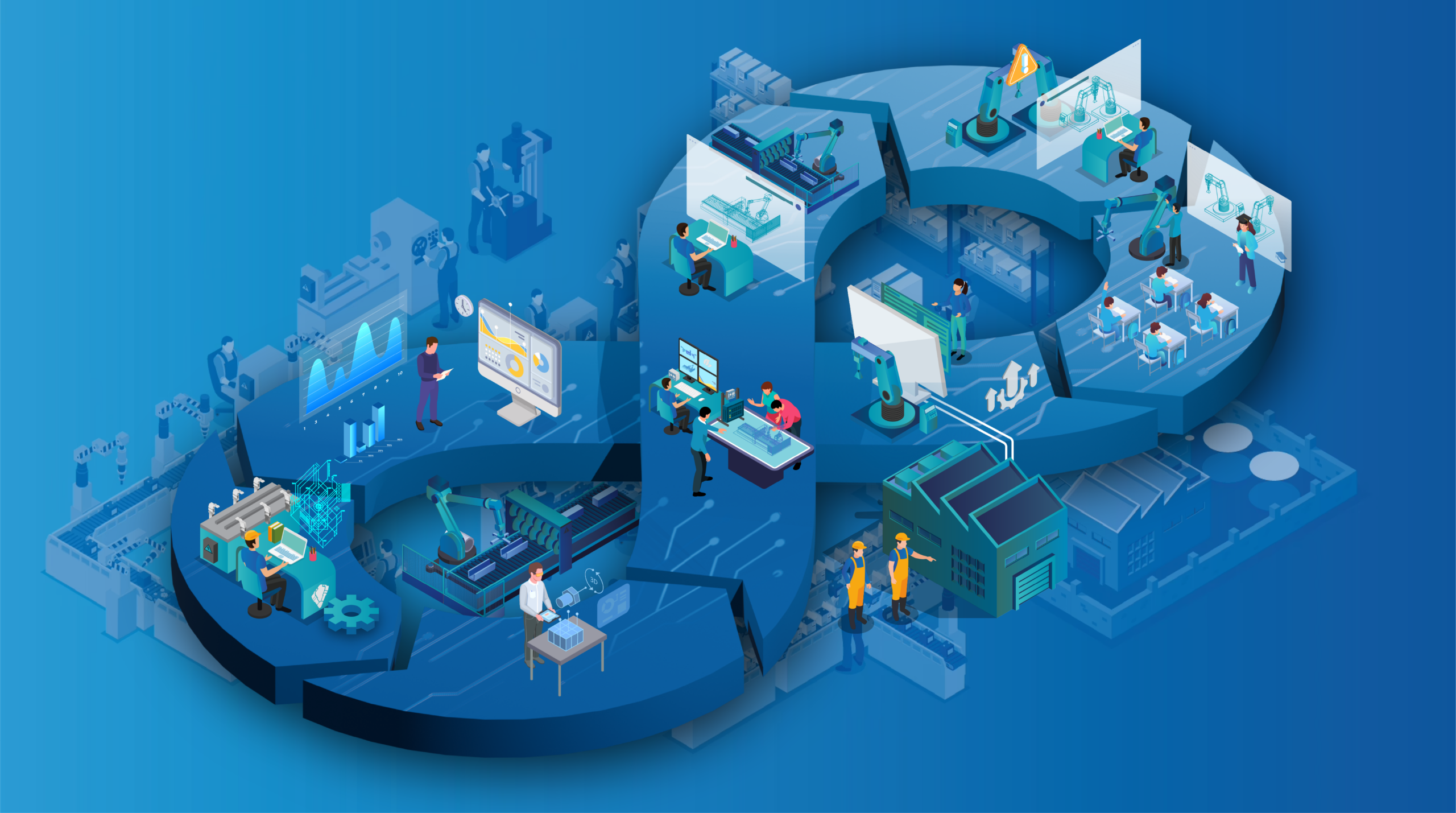
Ramp-up is one stage of a continuous digital workflow.

The model created for planning and virtual commissioning does not lose its value at start of production. Kept up to date, it supports ramp-up, later software changes, training and the comparison between planned and real production behavior.

The same environment carries the plant through its lifecycle, which is what makes fast, verifiable reactions possible during ramp-up.

01Planning and simulation of the production system
02Virtual commissioning of the automation software
03Ramp-up to stable series production
04Monitoring, analysis and continuous optimization
05Training, changes and future retrofits

Continue exploring

Method, tools and skills around ramp-up.

Before start-up

Virtual commissioning

Validate PLC logic, robot programs and system behavior before the plant exists to shorten the ramp-up that follows.

Explore virtual commissioning
After start-up

Monitoring & Analysis

Use production data to understand system behavior, evaluate performance and keep improving after ramp-up.

Explore monitoring
Qualification

Software training

Enable your engineers to maintain models, run analyses and verify changes independently in future projects.

Explore software training

Frequently asked questions

Ramp-up, clearly explained.

What does ramp-up mean in production?
Ramp-up is the phase between the first produced parts and stable series production at the agreed output. During this period, software, process parameters, material flow and operating procedures are adjusted until the plant reliably reaches its target performance.
Does EKS InTec offer a dedicated ramp-up product?
No. Ramp-up support is delivered as engineering work. Our specialists use the RF::SUITE tools and the existing digital twin to analyse plant behavior, reproduce effects offline and verify changes before they are applied to the running system.
How does virtual commissioning influence the ramp-up?
Functions that were validated virtually rarely have to be investigated again under production pressure. Virtual commissioning shifts software and integration issues into an earlier phase, so ramp-up can focus on real physical effects, process behavior and optimization.
Can the digital twin still be used after start of production?
Yes, if the model is maintained and updated to the as-built plant. It can then be used to reproduce observed behavior, test software changes with regression checks, train personnel and compare planned with real production performance.
What data is needed for a ramp-up analysis?
Useful inputs include recorded signal and controller data, cycle time information, fault and message statistics, current software versions, robot programs and the existing simulation model. The concrete requirement is defined at the start of the support.
Is support possible if no simulation model exists yet?
Yes. Analysis and engineering support can start from production and controller data alone. If a model is useful for the situation, it can be built or reconstructed for the relevant part of the plant instead of the complete system.
How long does ramp-up support usually last?
It depends on the plant, the output target and the effects observed. Support ranges from a focused analysis of a single station to continuous engineering assistance until the agreed production rate is reached and confirmed.

Your ramp-up phase

Get to stable production with fewer detours.

Whether your plant is about to start production or already fighting recurring losses, our team can help you analyse the behavior, verify the corrections and keep the digital twin useful for everything that follows.

EKS Hub signup

We look forward to activating you for our customer portal. Please fill the fields bellow, we will notify you once access has been granted

Data protection information Your request is encrypted and transmitted to our server via HTTPS. You agree that we may use the information you provide to respond to your request. Further information can be found in our data protection declaration .