

















RF::SCOUT InterlockCheck
InterlockCheck – The Key to Safe, Collision-Free Robotic Manufacturing
Systematically verify programmed interlocks, identify potential robot-robot collisions and establish a reliable quality gate before robot software reaches production.
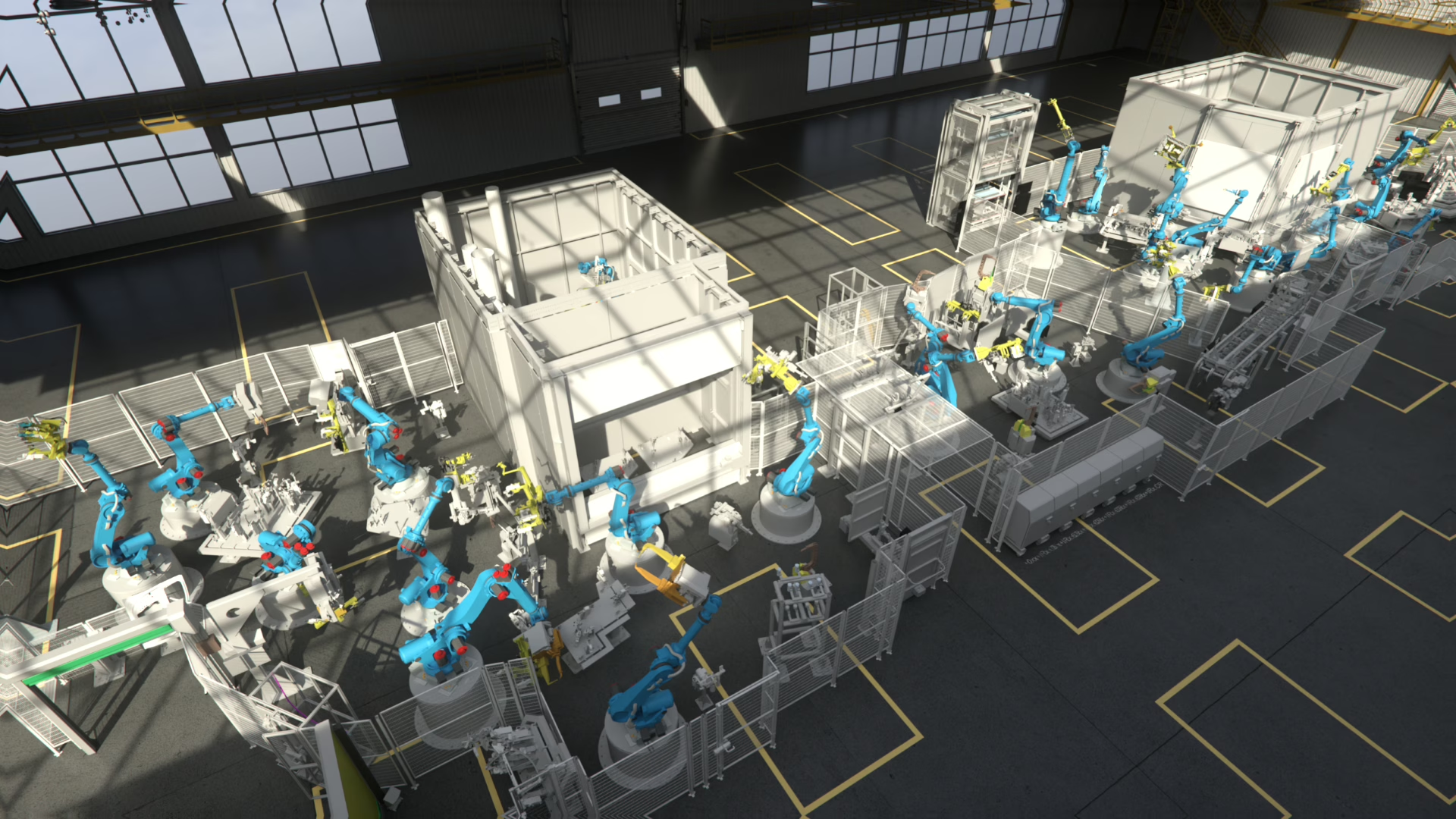
In modern manufacturing environments, multiple robots often operate within shared workspaces. This creates complex dependencies between robot movements and the interlocks designed to keep those movements safe.
InterlockCheck, a component of RF::SCOUT, systematically analyzes these programmed interlocks and verifies possible robot interactions before implementation. Potential conflicts can therefore be identified before they lead to equipment damage or production downtime.
The result is a proactive verification process that connects collision prevention, virtual-to-real alignment and robot software quality assurance.
How InterlockCheck Enhances Production Safety
Conventional safety checks often take place late in commissioning, when changes are already expensive and time-consuming. InterlockCheck moves verification to the programming level, allowing robot interactions to be analyzed virtually before the system enters production.
Identifying Potential Robot-Robot Collisions
The core strength of InterlockCheck is its systematic analysis of programmed interlocks across multiple robot systems. Its central capabilities include:
- Creating a comprehensive interlock matrix that maps robot movements and dependencies
- Revealing missing, inconsistent or incorrectly programmed interlocks
- Checking possible robot interactions systematically instead of relying on manual spot checks
- Providing detailed 3D visualization to examine potential collision situations from different angles
InterlockCheck identifies safety-relevant programming issues before they become physical collisions on the factory floor.
SHIFT Technology – Bridging Virtual and Real Worlds
Even a carefully prepared virtual model may differ from the physical installation. Robot positions, cell geometry and commissioning changes can create alignment discrepancies that reduce the reliability of a purely virtual collision analysis.
SHIFT technology addresses this challenge by aligning the virtual plant model with the real installation using robot programs. This produces a more accurate basis for InterlockCheck analysis.
Identify deviations between virtual models and physical installations
Use robot programs as the basis for precise alignment
Transform theoretical geometry into a practical representation of the real cell
Improve the accuracy and relevance of collision-analysis results
This alignment gives engineering teams greater confidence that the situations evaluated in RF::SCOUT correspond closely to the conditions found on the factory floor.
InterlockCheck as a Quality Gate for Robot Software
InterlockCheck is not limited to collision prevention. It can also serve as a formal quality gate throughout the robot software development lifecycle, ensuring that relevant programs are verified before release.
Ensuring Programming Consistency
The interlock matrix makes programmed safety relationships visible across multiple robot systems. Inconsistencies can be identified even when programs have been created or modified by different engineers.
Verification can be filtered by specific programs or robot groups. This enables targeted rechecks after a modification instead of requiring the complete system to be analyzed again every time.
- Structured visibility across all relevant interlock relationships
- Targeted verification of selected robot groups or programs
- Visual confirmation through an understandable 3D representation
- A repeatable verification process independent of individual programmers
Reporting and Documentation
InterlockCheck generates reports that support engineering reviews, quality assurance and long-term system documentation. Depending on the analysis, these reports can document:
- Complete interlock matrices
- Detected inconsistencies and potential conflict situations
- Information for targeted correction and follow-up verification
Retaining these reports alongside the system documentation creates a traceable history of safety verification across the system lifecycle.
Implementation Benefits and Practical Impact
Introducing InterlockCheck creates a systematic verification layer between robot programming and production. The practical value lies in identifying potential issues earlier, reducing manual checking effort and making verification results easier to understand and document.
Operational Benefits
Earlier detection of safety-relevant programming errors
Lower risk of collision-related commissioning delays and downtime
Consistent verification across complex multi-robot systems
Clear documentation for engineering, maintenance and quality teams
Best Practices for Effective Use
Start with complete system data, including the relevant robot programs, recorded signals, symbol lists and the available 3D model. Verification should involve both engineering and production teams so that technical findings can be evaluated in their operational context.
The verification data should be updated whenever robot programs or the physical installation change. Integrating InterlockCheck into the regular software release process turns a one-time analysis into a sustainable quality-assurance workflow.
Securing Robotic Production with InterlockCheck
As robotic manufacturing systems become more interconnected, safety-relevant dependencies become harder to verify manually. InterlockCheck provides a structured method for analyzing programmed interlocks, visualizing potential conflicts and documenting the results.
Combined with SHIFT technology, the analysis can be aligned more closely with the real production environment. This turns robot safety from a reactive commissioning task into a repeatable and proactive quality process.
Verify Before Production Starts
Discover how InterlockCheck can support collision prevention, robot-software verification and safer commissioning in your production environment.
Contact usFrequently Asked Questions
FAQ
What data is needed for InterlockCheck?
The basic data includes recorded data, for example via RecV2, and symbol lists for identifying signals. A complete InterlockCheck analysis also requires 3D data in an RF::YAMS file and robot data such as robot backups.
Can I analyze both virtual and real production data?
Yes. RF::SCOUT can record data from a virtual commissioning cell and use live data from the real cell for analysis. Both environments can also be compared within the analysis workflow.
Which robot types and standards are supported?
InterlockCheck supports robot systems from manufacturers including ABB, KUKA and FANUC, as well as multiple OEM standards such as Mercedes-Benz, Volkswagen, BMW, VDL, FFT and General Motors. Custom standards can also be added.
Can InterlockCheck use data from Process Simulate?
InterlockCheck does not load Process Simulate data directly. RF::YAMS can be used as an intermediate step to convert the relevant data into a format that can be loaded into RF::SCOUT.
How does InterlockCheck improve production safety?
InterlockCheck systematically analyzes programmed interlocks and checks possible interactions between robots. Potential collision situations can therefore be identified before they cause equipment damage or production downtime.
What benefits does SHIFT technology provide?
SHIFT aligns virtual plant models with the real installation using robot programs. This helps identify positioning differences and creates a more accurate basis for InterlockCheck analysis.